
HIST405N Week 1: Case Study
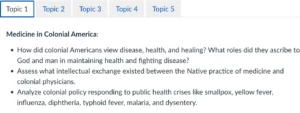

Medicine in Colonial America:
- How did colonial Americans view disease, health, and healing? What roles did they ascribe to God and man in maintaining health and fighting disease?
- Assess what intellectual exchange existed between the Native practice of medicine and colonial physicians.
- Analyze colonial policy responding to public health crises like smallpox, yellow fever, influenza, diphtheria, typhoid fever, malaria, and dysentery.
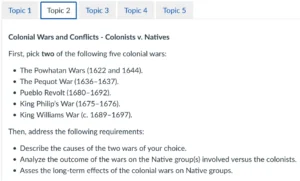
Colonial Wars and Conflicts – Colonists v. Natives
First, pick two of the following five colonial wars:
- The Powhatan Wars (1622 and 1644).
- The Pequot War (1636–1637).
- Pueblo Revolt (1680–1692).
- King Philip’s War (1675–1676).
- King Williams War (c. 1689–1697).
Then, address the following requirements:
- Describe the causes of the two wars of your choice.
- Analyze the outcome of the wars on the Native group(s) involved versus the colonists.
- Asses the long-term effects of the colonial wars on Native groups.
The Mayflower Compact and Early Self-Government
- Evaluate why the Mayflower Compact was necessitated.
- Describe in what ways the Mayflower Compact contributed to early self-government.
- Analyze how the Mayflower Compact set precedence for American democracy.
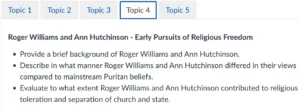
Roger Williams and Ann Hutchinson – Early Pursuits of Religious Freedom
- Provide a brief background of Roger Williams and Ann Hutchinson.
- Describe in what manner Roger Williams and Ann Hutchinson differed in their views compared to mainstream Puritan beliefs.
- Evaluate to what extent Roger Williams and Ann Hutchinson contributed to religious toleration and separation of church and state.
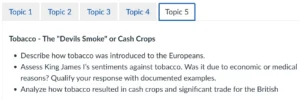
Tobacco – The “Devils Smoke” or Cash Crops
- Describe how tobacco was introduced to the Europeans.
- Assess King James I’s sentiments against tobacco. Was it due to economic or medical reasons? Qualify your response with documented examples.
- Analyze how tobacco resulted in cash crops and significant trade for the British
SOLUTION
Medical care in colonial America was influenced by a combination of religious doctrine, Indigenous healing traditions, and European medical theory. As settlers encountered unfamiliar diseases in the New World, they relied on a blend of spiritual beliefs and hands-on remedies to manage illness. Understanding the evolution of American medicine requires examining colonists’ inherited views of disease, their faith-based practices, and the medical knowledge shared by Native populations. This paper examines three key areas of inquiry, with historical analysis centered on two primary themes: colonial perceptions of illness and treatment methods, and the exchange of medical knowledge between Native peoples and settlers, including how public health strategies evolved in response to widespread disease outbreaks……………………………………….access the rest of the assignment at $10 only

Reviews
There are no reviews yet.