
NR601 Week 2: Quiz – [July 2026]
Which patient is at the HIGHEST risk for developing heart failure?
Answers: A – D
- A 35-year-old who consumes alcohol socially on the weekends and does not exercise regularly
- A 60-year-old with well-controlled hypothyroidism and no cardiac history
- A 52-year-old with a history of hypertension, type 2 diabetes, and hyperlipidemia ✅ 🟢
- 40-year-old with mild asthma and a BMI of 24
Which finding in a patient MOST strongly supports a diagnosis of hypertension with possible end-organ involvement?
Answers: A – D
- BMI of 36 and occasional fatigue
- Chronic cough and urinary frequency
- S3 heart sound and visual disturbances ✅ 🟢
- Headache and a heart rate of 52 bpm
Which diagnostic finding MOST strongly supports a diagnosis of end-organ damage related to chronic hypertension?
Answers: A – D
- Normal serum creatinine and mild headaches
- Mild proteinuria with no evidence of left ventricular changes
- Increased voltage criteria on ECG and retinal hemorrhages ✅ 🟢
- Slightly elevated blood pressure and infiltrate on chest X-ray
Which diagnostic finding BEST supports a diagnosis of chronic left-sided heart failure?
Answers: A – D
- Flattened diaphragm and hyperinflated lungs on chest X-ray
- ST-segment changes on ECG and clear lung fields
- Cardiomegaly on chest X-ray and vascular redistribution in the lungs ✅ 🟢
- Normal chest X-ray and right atrial enlargement on echocardiogram
Which assessment finding is MOST consistent with developing coronary artery disease in an older adult client?
Answers: A – D
- Chronic productive cough and inspiratory wheezes
- Sudden onset of unilateral lower extremity weakness
- Occasional shortness of breath during exertion and an S3 heart sound ✅ 🟢
- Warm, well-perfused extremities and brisk capillary refill
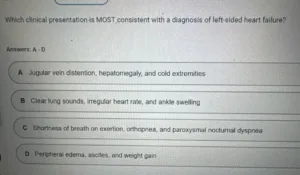
Which clinical presentation is MOST consistent with a diagnosis of left-sided heart failure?
Answers: A – D
- Jugular vein distention, hepatomegaly, and cold extremities
- Clear lung sounds, irregular heart rate, and ankle swelling
- Shortness of breath on exertion, orthopnea, and paroxysmal nocturnal dyspnea ✅ 🟢
- D. Peripheral edema, ascites, and weight gain…………………….. Purchase all the 25 questions and answers for only $ 20


Reviews
There are no reviews yet.